HEENASTYLE EDIT · FESTIVE STYLE GUIDE
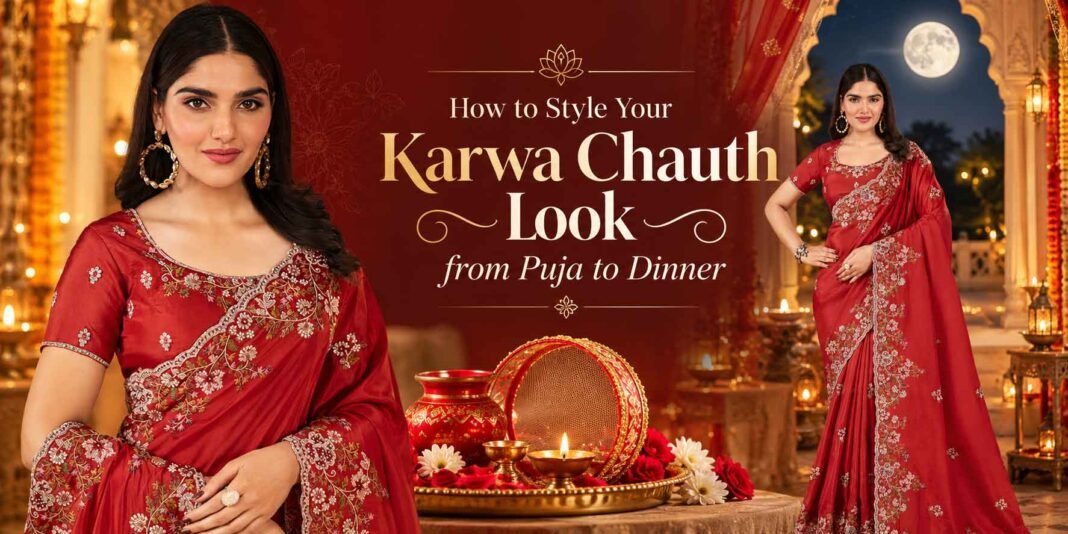
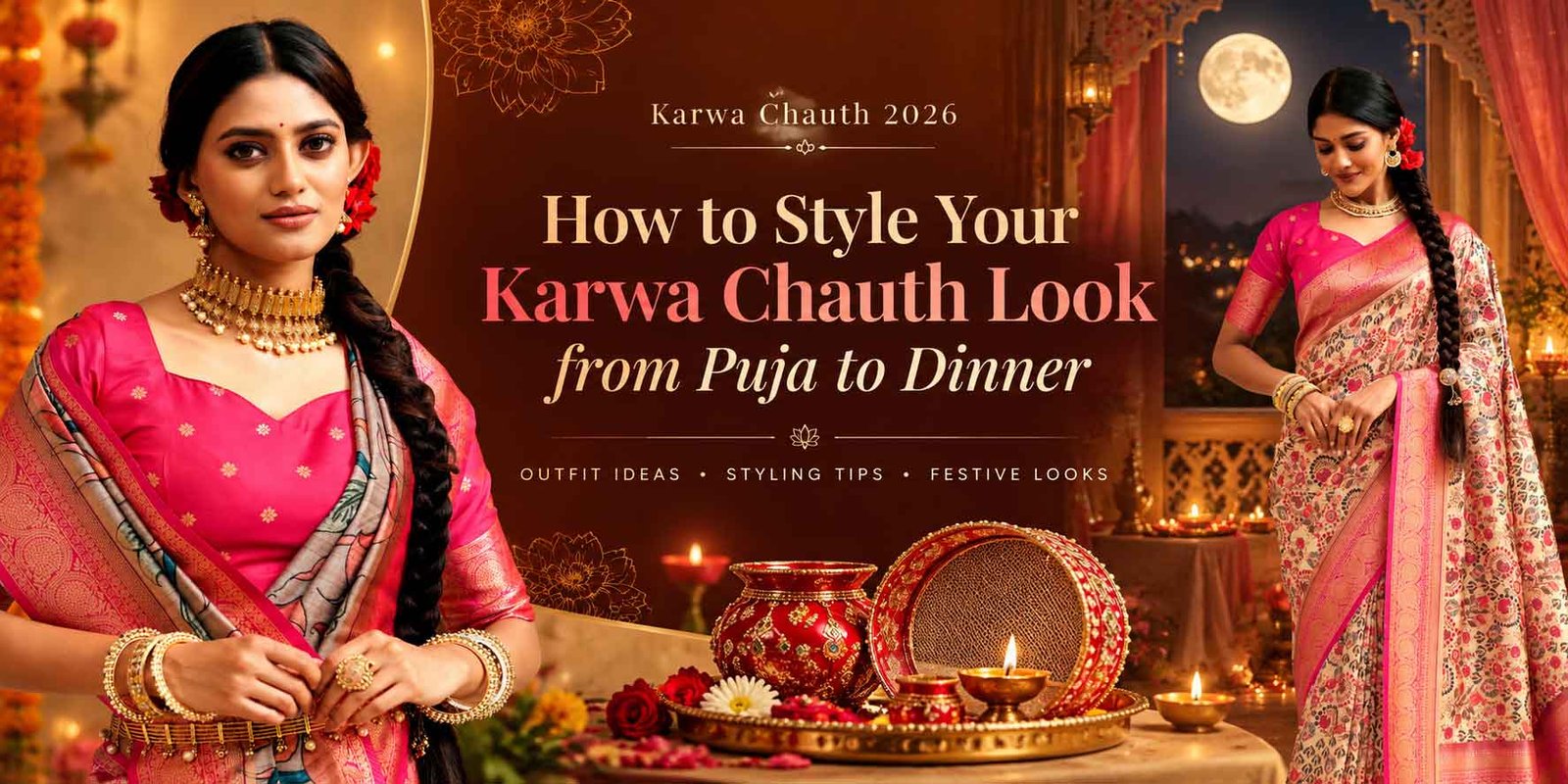
How to Style Your Karwa Chauth Look from Puja to Dinner
A thoughtful, phase-by-phase guide to choosing your Karwa Chauth outfit, styling sarees and suits, finding a comfortable fit, and carrying your look from the evening puja to dinner.
Karwa Chauth is not a single outfit moment. It is a long day of family rituals, preparation, getting dressed, evening puja, moonrise and finally sitting down to eat. Your clothes need to work through all of it.
The most memorable look is not necessarily the heaviest saree or the most embellished lehenga. It is the outfit that reflects your personal style, sits comfortably when you are seated, stays secure when you move, and still feels good when the celebrations reach dinner.
This guide takes you through the day step by step, with outfit ideas, fabric and fit advice, jewellery suggestions, plus-size styling tips and practical details that can make your celebration easier.
01 / THE BIG PICTURE
Plan Your Karwa Chauth Outfit for the Whole Day
Before choosing a colour or placing an order, think through how your day will unfold. Will you be at home for most of the day, visiting relatives, attending a group puja or going out for dinner after moonrise? The answer helps you decide how formal your outfit needs to be and which details deserve attention.
A useful approach is to plan around two dressing moments rather than buying a separate outfit for every phase: something soft and easy for the early hours, if needed, and your main festive look for the evening. You can then refresh the evening look with small changes instead of starting from scratch.
The editor’s rule: Decide on comfort first, silhouette second and embellishment third. A beautiful outfit is easier to enjoy when you can sit, walk, reach and move without constantly adjusting it.
Three details worth checking before the day
- Fit while seated: Sit down in your blouse, waistband or kurta before the event. Check for pulling, tightness or fabric that shifts uncomfortably.
- Secure styling: Test your dupatta pins, saree pleats, blouse fastening and jewellery before you are ready to leave.
- Practical footwear: Walk around in your chosen shoes. If you are wearing heels, make sure you can stand and walk steadily in them.
02 / EARLY MORNING
Phase One: Sargi and the Early Morning
The early hours call for a gentler kind of dressing. If your family observes sargi before sunrise, a soft kurta set, lightweight printed suit or simple Anarkali can look put together without requiring a full evening-ready transformation before the day has properly begun.
Choose fabric according to the weather and your own comfort. Cotton and other breathable fabrics may feel pleasant for a relaxed morning at home; a light woven or softly draped outfit can work when you want a little more polish. Avoid choosing something that needs constant steaming, pinning or careful handling when you are still waking up.
How to keep the early look polished
- Choose a coordinated kurta and bottom, or a simple printed suit.
- Add small earrings, a slim bangle or another light accessory.
- Keep your hairstyle simple and secure, especially if you will be busy preparing for the day.
- Choose a dupatta that stays in place without repeated adjustment.
If you prefer a traditional silhouette, browse Anarkali and churidar suits for outfit inspiration. The aim is not to dress down the occasion; it is to match the outfit to the pace of the morning.
03 / COMFORT FIRST
Phase Two: Comfort Through the Day
As the day continues, comfort becomes more noticeable than any single styling detail. You may be preparing the home, welcoming relatives, organising puja items or moving between rooms. Clothes that feel fine for a photograph can become frustrating if the waistband digs in, the sleeves restrict movement or the dupatta keeps slipping.
A relaxed kurta set, an easy-fit palazzo suit or a lightly structured Anarkali can be practical choices for daytime tasks. Look for enough room through the shoulders and arms, a lining that feels comfortable against the skin, and a length that does not catch underfoot.
Explore salwar suits for traditional everyday-to-festive options. If you like a wider-leg silhouette, consider a palazzo-style outfit that gives you room to move.
Keep accessories light during busy hours. You can save a more elaborate necklace, larger earrings or a stronger lip colour for the evening. This creates a natural shift in the look without needing an entirely different wardrobe.
A practical reminder: If you are observing a fast, follow your family’s traditions and your own health needs. Clothing advice cannot make fasting safe for everyone; seek appropriate medical guidance if fasting may not be suitable for you.
04 / THE EVENING LOOK
Phase Three: The Evening Transformation
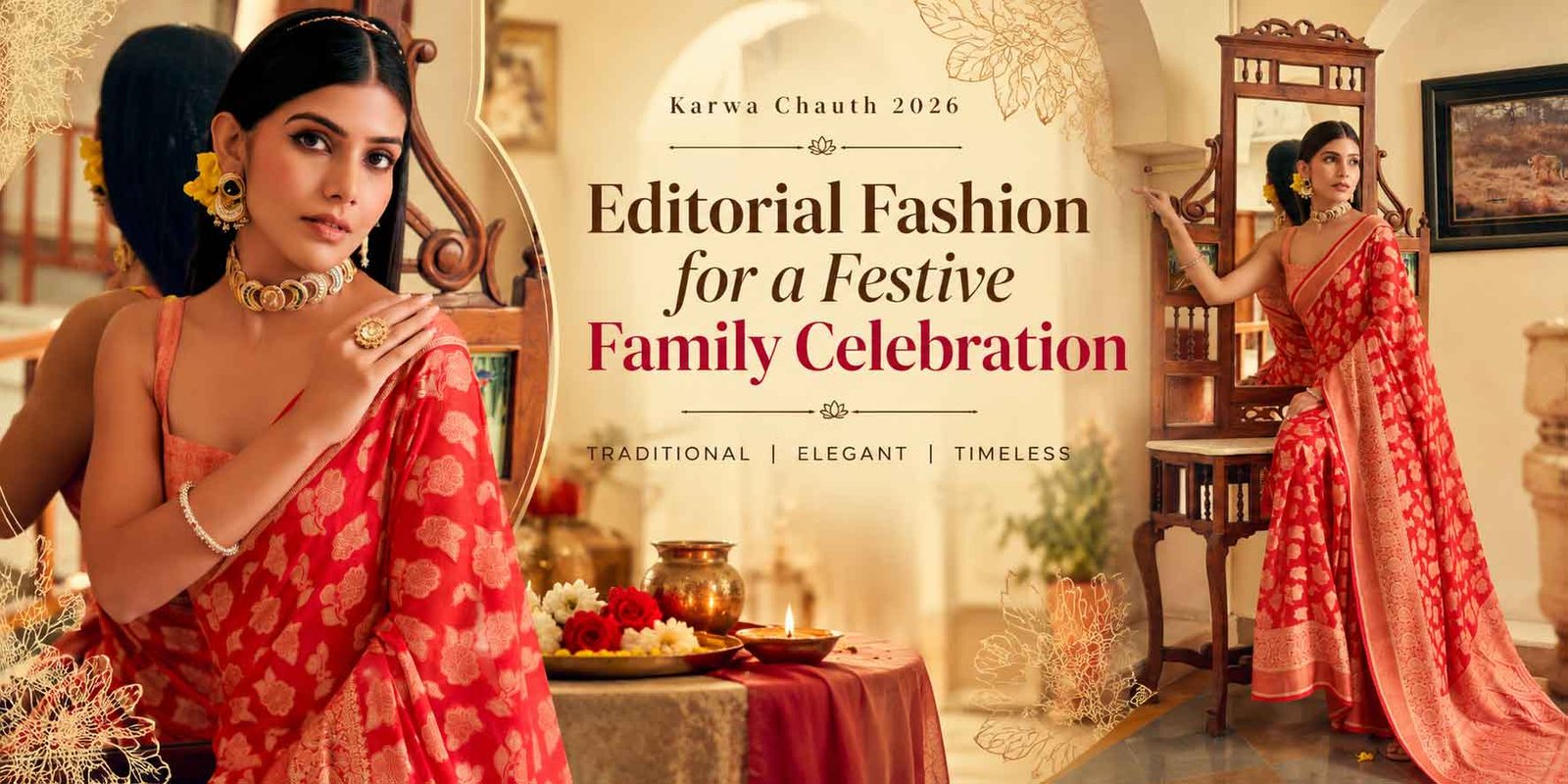
The late afternoon is when the main festive look comes together. This is the moment to bring in richer colour, embroidery, jewellery and the details you have been looking forward to wearing. You might choose a classic red saree, a deep maroon suit, a jewel-toned Anarkali or a lehenga with a beautifully finished border.
Red is a familiar festive favourite, but it is not the only option. Emerald green, wine, maroon, rani pink, royal blue and softer shades can all create a memorable look. Choose a colour that works with your wardrobe, the occasion and what makes you feel confident.
Build the look in the right order
- Start with the outfit. Put on the saree, suit or lehenga and make sure the fit and drape feel secure.
- Choose one focal point. If the outfit has heavy embroidery, keep jewellery simpler. If the outfit is minimal, one statement necklace or pair of earrings can add impact.
- Finish the hair and makeup. Choose a style that will hold through the evening. Keep touch-up products nearby rather than aiming for a look that needs constant maintenance.
- Test movement. Sit, stand, raise your arms gently and walk a few steps before leaving the mirror.
For a traditional look, explore embroidered salwar suits, sarees or lehenga styles. Choose the outfit first, then let accessories support it rather than compete with it.
05 / THE RITUAL
Phase Four: Puja and Moonrise
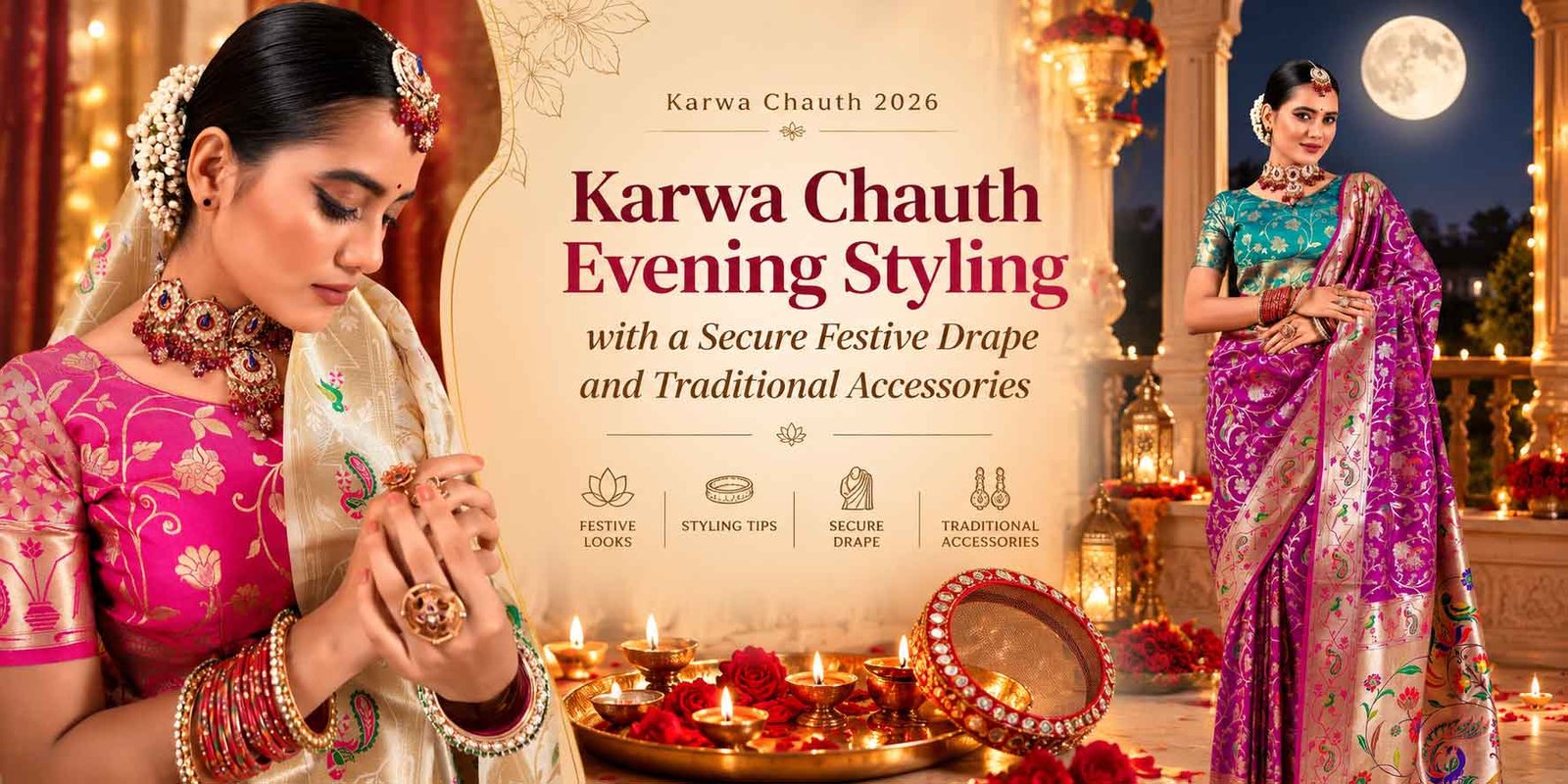
At puja and moonrise, practical details matter. You may be sitting with family, holding a thali, handling a diya or moving outdoors to view the moon. A secure outfit allows you to focus on the moment rather than worry about a slipping pallu or jewellery that keeps catching.
Make your outfit ritual-friendly
- Secure the drape: Pin the pallu or dupatta discreetly so it remains in place when you sit, stand or move.
- Keep sleeves manageable: Make sure sleeves and loose fabric do not fall into the thali or near a flame.
- Choose stable jewellery: Avoid pieces that swing into your face or need frequent adjustment when you move your hands.
- Check the hem: Make sure your saree or lehenga length does not trip you, especially when walking in low light.
- Think about footwear: If you will step outside, choose shoes that feel stable on the surface you will be walking on.
Karwa Chauth customs vary between families and regions. Follow the puja practices familiar to your household and the guidance of family elders. The styling goal is simple: keep your outfit secure and comfortable so you can take part without unnecessary distractions.
06 / THE LAST ACT
Phase Five: Dinner Without Discomfort
After moonrise, the mood changes. The formal photographs may be done, the rituals are complete and everyone finally sits down together. This is when a very tight waistband, a heavy necklace or a skirt that is difficult to move in can become more noticeable.
When choosing your main outfit, think about the dinner stage before you buy or get dressed. Can you sit comfortably in the blouse? Does the lehenga waistband allow you to relax? Will the saree stay neat when you sit at a table? These questions are just as important as how the outfit looks standing up.
Small changes that refresh the look
- Swap smaller earrings for a statement pair, or add a single necklace if the neckline allows.
- Touch up lipstick and tidy flyaway hair rather than redoing your entire look.
- Carry a small clutch or evening bag with the essentials you actually need.
- If your outfit allows it, remove an accessory that feels heavy after several hours.
Comfort does not make a festive outfit less glamorous. It helps you enjoy the evening you dressed for in the first place.
THE CLASSIC
How to Style a Karwa Chauth Saree
A saree can look traditional, contemporary or quietly glamorous depending on the fabric, blouse and drape. For a classic look, choose a silk saree or a design with a defined border. For a lighter evening outfit, consider a saree with delicate embellishment and a blouse that adds interest without making the full look feel too heavy.
Blouse, drape and accessories
The blouse has a major effect on both appearance and comfort. Check the armhole, shoulder fit and fastening before the event. If you will be seated for a long time, make sure the blouse does not pull or dig in when you move your arms. Pin the pallu in a way that feels secure but still lets you adjust your posture naturally.
For jewellery, use the saree’s work as your guide. A richly embellished border may need only earrings and bangles, while a simpler saree can carry a statement necklace. Choose one main focal point to keep the look considered.
Browse party-wear sarees, silk sarees and the plus-size saree collection for more outfit inspiration.
EASY ELEGANCE
How to Style a Salwar Suit or Anarkali
A suit is a strong option when you want a traditional look with freedom of movement. An Anarkali creates a flowing silhouette, while a straight-cut or palazzo suit can feel more streamlined. Embroidery at the neckline, sleeves or hem adds festive detail without requiring a large amount of jewellery.
Pay attention to the dupatta. A secure pin at the shoulder can keep it in place, while a neatly arranged drape can frame the neckline and embroidery. Check that the dupatta is not so long that it catches underfoot or near a diya.
Red works beautifully for a classic festive look, but deep green, plum, black, pink and other shades can be equally personal. Explore Anarkali and churidar suits, red salwar suits, black salwar suits and plus-size suits.
THE STATEMENT LOOK
How to Style a Karwa Chauth Lehenga
A lehenga brings movement and occasion-ready drama, especially when the skirt has a detailed border or the blouse features thoughtful embroidery. To keep the look balanced, let the outfit’s most decorative element lead. If the skirt and blouse are heavily worked, choose lighter jewellery; if the outfit is simpler, use earrings or a necklace to add definition.
Fit is essential. Check that the waistband remains comfortable when sitting and that the skirt does not drag or catch underfoot. Make sure the blouse offers comfortable support, and secure the dupatta before the evening begins so you do not need to keep rearranging it.
Explore red lehengas, art silk lehengas, embroidered lehenga designs and plus-size lehenga choli.
STYLE FOR EVERY BODY
Plus-Size Karwa Chauth Styling: Fit Comes First
Every body deserves festive clothing that feels considered, beautiful and comfortable. If you are shopping for plus-size Karwa Chauth wear, begin with measurements and garment construction rather than relying on the size label alone. Sizing can differ between styles, so check the product’s measurements and size information before ordering.
What to look for in each outfit
- Sarees: Choose a drape you can secure comfortably and a blouse that fits well through the bust, shoulders and arms. If ordering a blouse separately or choosing stitching, allow time for fitting adjustments.
- Salwar suits: Check the armhole, sleeve width, lining and hip ease. You should be able to sit and raise your arms without the fabric pulling sharply.
- Lehengas: Check waist measurements and blouse fit carefully. The waistband should stay in place without feeling restrictive when you sit.
- Length and movement: Try the outfit with the footwear you plan to wear and make sure the hem does not catch underfoot.
- Colour and detail: Red, green, maroon, blue, pink and neutral tones can all work. Choose the colour and embellishment level that makes you feel most like yourself.
Explore plus-size suits, plus-size sarees and plus-size lehenga choli at HeenaStyle. Review each product page for current size availability, fabric details, prices and delivery information.
Shopping tip: If you need alterations, do not leave them until the day before. A short fitting session can help you check sitting comfort, sleeve movement, hem length and the way the dupatta stays in place.
THE FINISHING DETAILS
Coordinate Your Outfit with Your Karwa Chauth Thali
A decorated thali can complement the evening look without becoming a project of its own. Start with a clean thali and choose one or two colours that echo your outfit—perhaps red and gold, green and ivory, or pink and silver. A coordinated palette can make the puja setup look thoughtful in photographs.
Simple decoration ideas
- Use a neatly arranged decorative cloth or trim, making sure fabric stays well away from any flame.
- Arrange the customary puja items according to your family’s practice, leaving enough space to handle them safely.
- If you want to include a photo, place a small printed photo or frame securely beside the thali, away from liquids and heat.
- Keep paper, ribbon, flowers and fabric decorations away from diyas and candles.
- Match one accent colour from the thali to your bangles, dupatta or outfit embroidery for a subtle coordinated finish.
Karwa Chauth rituals vary by region and family. Use the items and arrangement customary in your household, and keep the setup practical as well as decorative.
BEFORE YOU STEP OUT
Your Karwa Chauth Outfit Checklist
Use this quick check before the evening puja:
- Outfit fits comfortably while standing and sitting.
- Saree pleats, pallu or dupatta are secured.
- Blouse hooks, zips and waistband feel comfortable.
- Hem length works with your chosen footwear.
- Jewellery does not snag or need constant adjustment.
- Makeup and hair products for a quick touch-up are ready.
- Loose fabric is kept safely away from diyas or candles.
- Your dinner plan and footwear have been considered, not just the photographs.
QUICK ANSWERS
Frequently Asked Questions
Which outfit is best for Karwa Chauth?
A saree, salwar suit, Anarkali or lehenga can all work well. Choose according to your family’s traditions, the plans for your day and the fit that feels comfortable for both puja and dinner.
How can I style my Karwa Chauth look from puja to dinner?
Choose an outfit that stays comfortable when seated, secure your drape and accessories before puja, then refresh your lipstick, hair or earrings for dinner. You do not need a complete outfit change to look polished.
What colours can I wear for Karwa Chauth?
Red is a popular festive choice, but maroon, green, pink, blue and other colours can also look beautiful. Choose a shade that reflects your personal style and family preferences.
What should plus-size women look for in a Karwa Chauth outfit?
Focus on garment measurements, comfortable armholes, a well-fitting blouse or waistband and enough room to sit and move. Check the specific product’s size chart and details before ordering.
Can I wear a simple outfit for Karwa Chauth?
Absolutely. A simple suit or saree can look festive with a neat drape, coordinated jewellery and one statement accessory. Comfort and personal style matter more than heavy embellishment.
How can I decorate a Karwa Chauth thali at home?
Choose a clean thali, coordinate a few colours with your outfit, arrange the customary items according to your family’s practice and keep all fabric and paper decorations safely away from flames.