NAVRATRI STYLE NOTES · DAY 2
Navratri Day 2 White Outfit Ideas: What to Wear for Garba
Some festive outfits make an entrance through colour. White takes a different route. It lets the details come forward: the shimmer of a mirror-work border, the soft fall of a dupatta, the swing of a skirt as the music picks up. At a Garba night filled with bright outfits and moving lights, a well-styled white look can feel both striking and refreshingly understated.
That is part of the appeal of dressing in white for the second day of Navratri. The colour is often associated with Maa Brahmacharini, a form of the Goddess connected with devotion, discipline and perseverance. White is commonly linked with calmness and simplicity, but that does not mean your outfit needs to be plain. Texture, proportion and a few considered accessories can make a white ensemble feel festive without overwhelming it.
Whether you are planning a full evening of Garba, attending a puja or meeting family for a festive dinner, start with one simple question: what do you want your outfit to do? A skirt that moves freely, a saree that stays neatly draped or an Anarkali that feels comfortable for hours can each create a different kind of celebration look.
White Has More Than One Mood
Before choosing a silhouette, consider the shade. Bright white has a crisp, clean finish and pairs beautifully with silver embellishment. Ivory and cream feel softer and can bring warmth to gold embroidery, antique jewellery and traditional borders. Pearl white sits somewhere between the two, offering a gentle glow that works well with both cool and warm accessories.
Fabric matters just as much as colour. Cotton and cotton blends can feel relaxed and breathable; georgette gives a skirt or dupatta fluid movement; silk blends add richness; and organza can introduce structure to sleeves or dupattas. The best option depends on the weather, the amount of embellishment and how long you expect to wear the outfit.
White also works well with accent colours. Emerald green, wine, royal blue, rose pink and antique gold can all add definition through a blouse, dupatta, waistband or jewellery. You do not need to use every shade at once. One clear contrast often looks more intentional than several competing details.
Let a White Lehenga Move with the Music
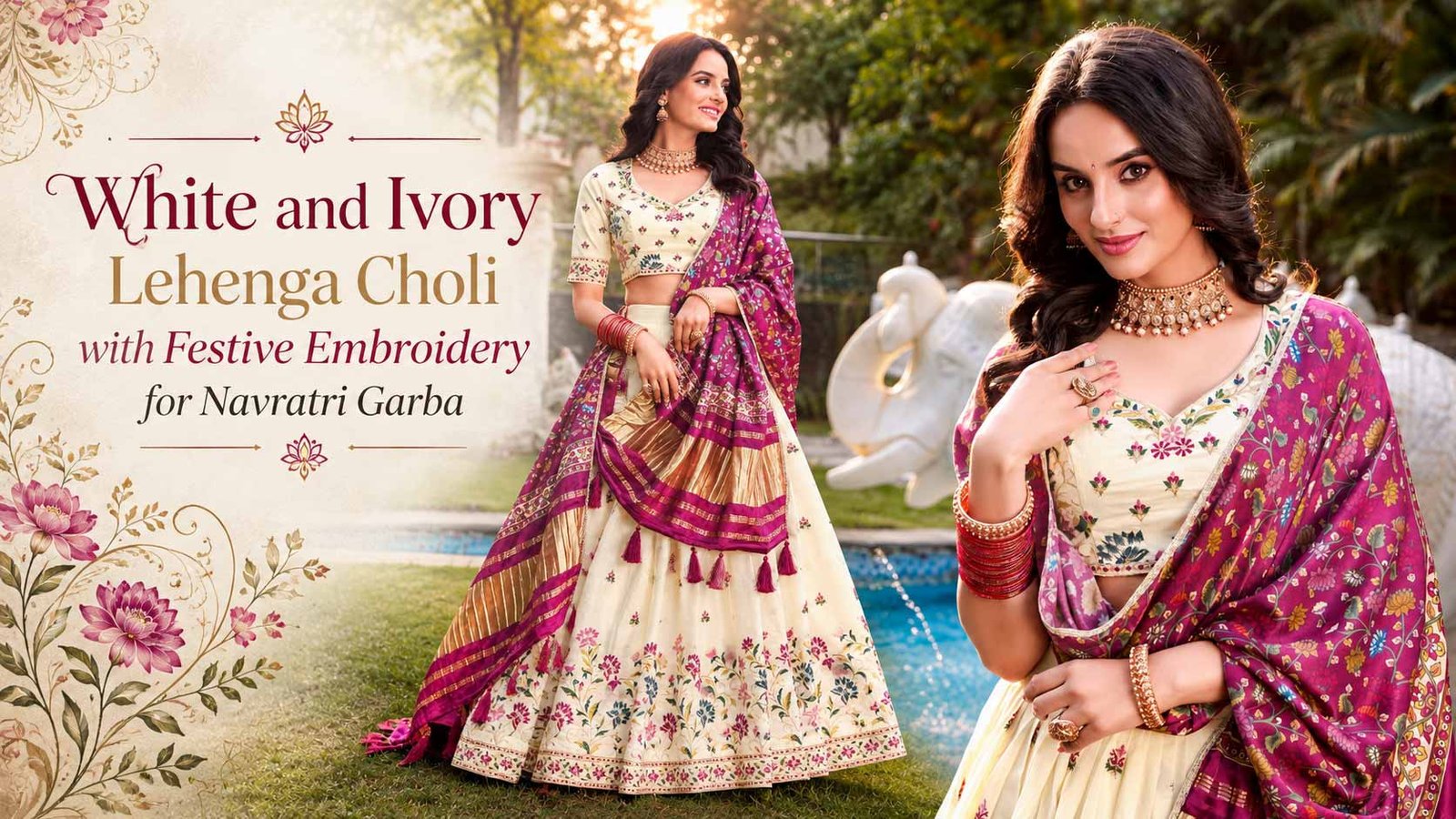
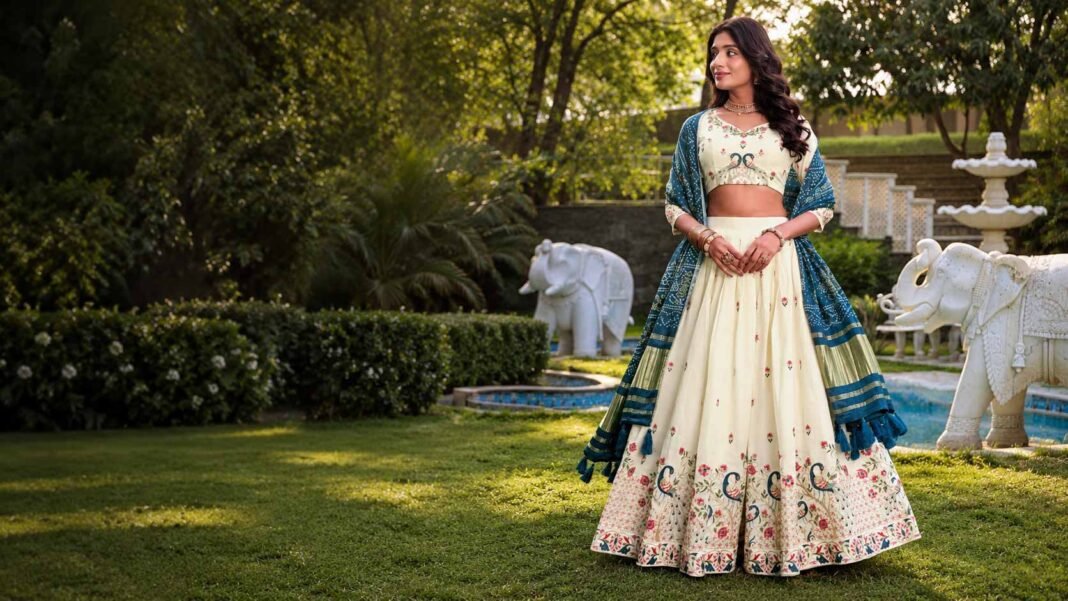
A white designer lehenga choli is a natural choice for anyone who wants a traditional Garba silhouette. A flared skirt creates movement, while mirror work, thread embroidery or a detailed hem gives the outfit its festive character. If the skirt already has a lot of decoration, a simpler blouse can make the whole ensemble feel balanced.
Think about how the skirt behaves, not just how it looks in a photograph. A very heavy lehenga can become tiring after several rounds of dancing, and a hem that is too long can catch under your feet. Try the full outfit on before the event, walk around, sit down and practise a few steps. The right fit should let you enjoy the evening rather than constantly adjust your clothes.
For a coordinated look, keep the palette tonal with ivory, silver and soft gold. For something bolder, choose a contrasting blouse or dupatta in emerald, maroon or royal blue. Both approaches work; the choice depends on whether you want the white base to feel soft and subtle or crisp and dramatic.
A Saree That Feels Festive Without Feeling Overdone
A white or ivory saree can be elegant in a quieter way. A fine border, delicate zari, textured weave or scattered sequin detail may be enough to make it suitable for a celebration. A contrasting blouse changes the mood quickly: silver can feel contemporary, gold feels traditional, and a jewel tone adds a more expressive note.
If you will be dancing, give the drape a practical test before leaving home. Secure the pleats, check that the pallu stays in place when you lift your arms and make sure the underskirt or shapewear feels comfortable when you sit and move. Lightweight fabric can be easier to manage for a long evening than a heavily embellished saree.
For more festive options, browse plus-size sarees and look at the garment measurements as well as the style. A comfortable fit at the waist and shoulders can make a noticeable difference to how confidently you carry the drape.
When an Anarkali or Salwar Suit Is the Better Choice
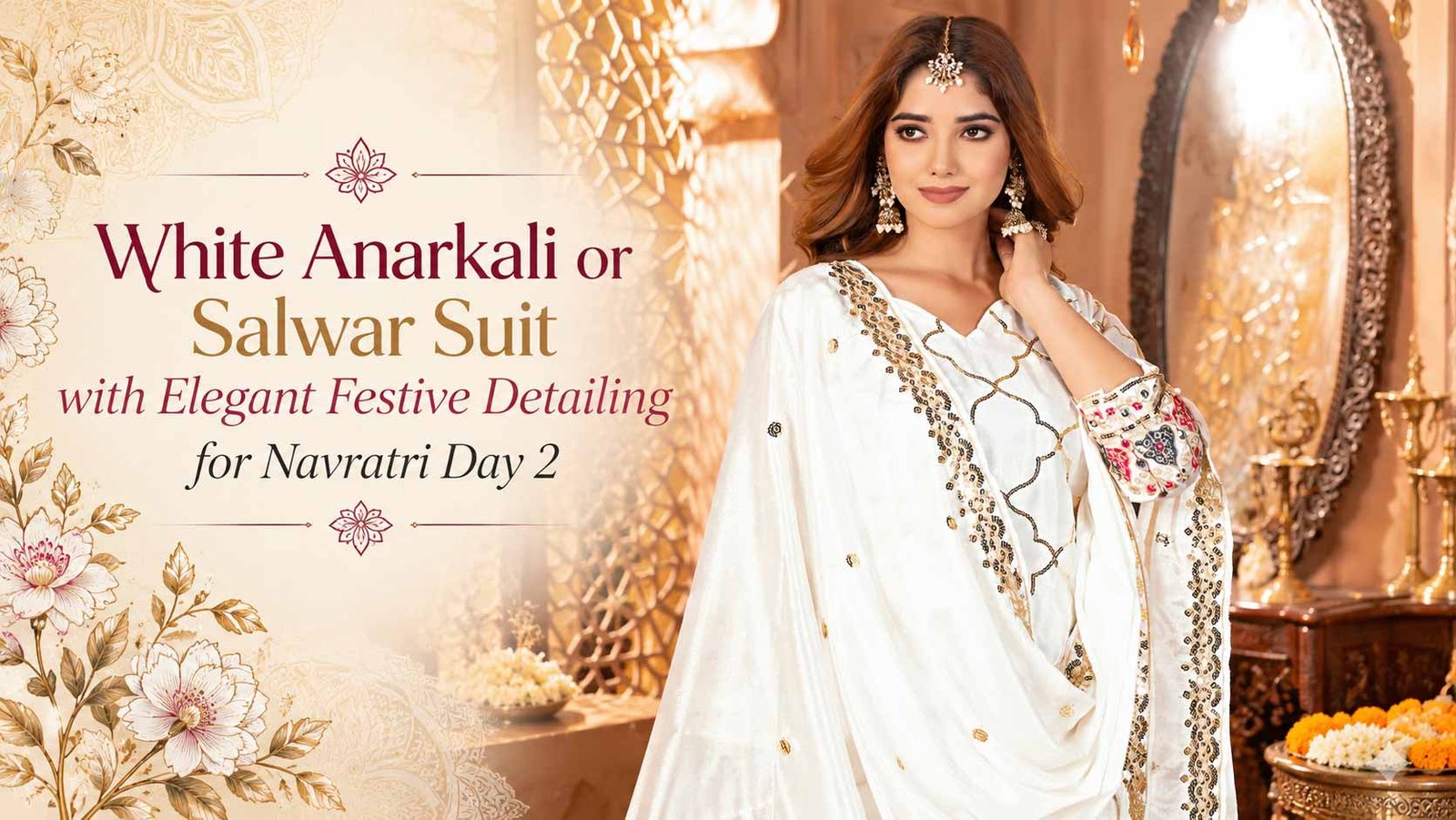
Not every celebration calls for a flared skirt or a saree. A white Anarkali offers a graceful silhouette with a little less styling to manage, while a straight-cut salwar suit can feel polished and easy to wear. Embroidery around the neckline, cuffs or hem brings visual interest without requiring heavy decoration throughout the outfit.
Choose a lining that feels comfortable, sleeves that allow you to move freely and trousers that are the right length for your footwear. If the dupatta tends to slip, try a different drape or secure it discreetly before the event. You can explore more Anarkali salwar kameez styles if you prefer a flowing shape with a traditional finish.
This option also works well if your day includes more than one activity. A thoughtfully detailed suit can take you from a family visit to an evening celebration with a change of earrings, lipstick or footwear rather than a complete outfit change.
Use Jewellery to Give the Outfit Its Character
White creates room for jewellery to stand out, so choose pieces that support the outfit instead of competing with it. Oxidised silver brings a folk-inspired finish, polished silver looks sleek, pearls feel delicate and gold-toned jewellery adds warmth. If your outfit already has dense mirror work or an ornate neckline, statement earrings may be all you need.
For a simpler suit or saree, a pair of jhumkas, a layered necklace, bangles or a distinctive ring can become the focal point. You can mix metals, too, especially when the embroidery already combines silver and gold threads. The aim is not to match every piece exactly, but to make the choices feel connected.
Consider your hairstyle as part of the styling. A braid or low bun can keep hair manageable during dancing, while a half-up style leaves room for earrings to show. If you enjoy floral accessories, a small cluster of flowers can soften the look without adding too much visual weight.
The Dupatta Can Change the Whole Look
A dupatta is more than a finishing layer; it can set the tone for the entire outfit. A tonal white dupatta with a fine border keeps things refined. A colourful embroidered version brings contrast and can connect the blouse, jewellery or footwear to the rest of the look. Tassels, mirror work and traditional borders add detail without requiring the entire outfit to be embellished.
Think about movement when choosing how to wear it. A neatly pinned drape can be practical for dancing, while a looser style may suit photographs or a dinner where you are not moving as much. If you will be carrying a bag or using dandiya sticks, make sure the fabric stays clear of your hands and does not drag near your feet.
Small Practical Choices Make a Big Difference
White can show makeup, dust and food marks more readily than darker colours, so prepare the outfit before you get dressed. Let moisturiser, sunscreen and perfume dry before the fabric touches your skin. Follow the garment care label when steaming or ironing, and be gentle around mirror work, sequins and delicate embroidery. A tissue or suitable stain-removal wipe in your bag can be useful for small accidents.
Comfort is part of styling, not an afterthought. Wear footwear you have already tested, check the hem length and make sure waistbands, sleeves and armholes do not pull when you move. If you are shopping online, compare your measurements with the size chart and garment details rather than relying on the size label alone. Different cuts and fabrics can fit differently.
These details matter for every body and every silhouette. The most successful outfit is not necessarily the most elaborate one; it is the one that lets you feel present, comfortable and ready to enjoy the celebration.
White Beyond the Garba Ground
If your Day 2 plans are centred on puja, a family gathering or a festive dinner, the same palette can take on a more understated mood. An ivory Anarkali with delicate embroidery feels graceful, while a cream saree with a contrasting blouse can look timeless without being overly formal. A simple white suit can also feel special with embroidered footwear, statement earrings or a dupatta in a festive shade.
Choose the outfit around the occasion rather than following a single formula. For a long dance evening, movement and secure draping may matter most. For a family dinner, you might prefer fine fabric details and jewellery. For puja, a lighter, more minimal look may feel right. White can adapt to all three without losing its character.
Your Day 2 Look, Your Way
Navratri style does not have to become more elaborate with every passing night. Sometimes a quieter palette gives you the chance to notice the details you might otherwise overlook: a beautiful neckline, the way a skirt moves, a border that catches the light or jewellery that feels personal. White can be traditional, contemporary, understated or dramatic depending on how you put those elements together.
Choose the silhouette that suits your plans, add one or two details you genuinely love and make sure the outfit feels good when you move. Whether you step onto the Garba floor in a mirror-work lehenga, arrive in a flowing saree or celebrate in an Anarkali, let the styling feel like you—not a checklist of trends.
Frequently Asked Questions
What should I wear for Navratri Day 2 Garba?
A white or ivory lehenga choli, saree, Anarkali or salwar suit can all work. Choose according to your plans, preferred style and comfort while moving.
Why is white associated with Navratri Day 2?
Many Navratri colour guides associate white with Day 2 and Maa Brahmacharini. The colour sequence can vary by regional tradition and calendar, so check the guidance followed by your family or event.
Which colours pair well with a white festive outfit?
Silver and gold create a classic finish, while emerald, royal blue, maroon and rose pink can add contrast through a blouse, dupatta or accessories.
What fabric is comfortable for a long Garba evening?
It depends on the weather, lining and embellishment. Lightweight georgette, cotton blends and lighter silk blends may be comfortable choices; try the complete outfit and test your movement before the event.
How can I keep a white outfit comfortable while dancing?
Check the hem, waistband, sleeves and footwear, and secure your dupatta or saree pallu. Practise walking and a few dance steps in the full outfit before leaving home.